Wednesday, February 11 2026
Göbeklitepe and Taş Tepeler Exhibition

Anatolian News

The Beginning of Human History in Berlin: Göbeklitepe and Taş Tepeler Exhibition Opens

Written by

The story of humanity’s earliest communities is now unfolding in the heart of Europe. On February 10, a major exhibition dedicated to Göbeklitepe and the wider Taş Tepeler region opens in Berlin, bringing 12,000 years of history to an international audience. Titled “The Discovery of Society: Life 12,000 Years Ago at Göbeklitepe and the Taş

New Research Pushes Human Presence in Anatolia Back Nearly One Million Years

New Research Pushes Human Presence in Anatolia Back Nearly One Million Years

Archaeological fieldwork in southeastern Türkiye is reshaping the deep prehistory of Anatolia. New evidence from Gaziantep suggests the region was not merely a corridor for early humans during the Ice Age—but a long-term habitat stretching back close to one million years. A Key Region in Anatolia’s Ice Age Landscape The research is being carried out

catalhoyuk-neolithic

Çatalhöyük Study Wins Major Award in Poland: Turkish Scientists Help Redefine Neolithic Social Structure

A groundbreaking study on the Neolithic settlement of Çatalhöyük has received international recognition in Poland, after being selected as the most important foreign archaeological discovery of 2025 by Polish archaeologists. The award highlights research that challenges long-standing assumptions about social organization in early farming communities—placing women at the center of Neolithic life. The distinction was

A 5,000-Year-Old Skull Reveals One of the Earliest Medical Interventions in Anatolia

A 5,000-Year-Old Skull Reveals One of the Earliest Medical Interventions in Anatolia

One of the most striking testimonies to early medical knowledge in Anatolia is now on display at the Samsun Museum. Dating back nearly 5,000 years, a human skull bearing clear evidence of surgical intervention is considered among the earliest known examples of cranial surgery in human history. What makes this discovery exceptional is not only

Excavations at Alalakh Are Shaping a New Late Bronze Age Cuneiform Archive

Excavations at Alalakh Are Shaping a New Late Bronze Age Cuneiform Archive

At Alalakh, archaeologists have identified the remains of a new Late Bronze Age cuneiform tablet archive during the 2025 excavation season. The discovery offers a rare, context-rich view of how administration functioned in one of the Levant’s key ancient cities. The work forms part of the long-running Tell Atchana excavations in Hatay, Türkiye, carried out

Royal Phrygian Tumulus

In Midas’ Shadow? The Royal Phrygian Tumulus in Western Anatolia Is Reshaping the Power Map

For much of the last century, the political and ceremonial geography of Phrygia has been interpreted through a single focal point: Gordion. Long regarded as the unquestioned center of royal authority, the city shaped how scholars understood power, hierarchy, and elite identity in Iron Age Anatolia. A newly analyzed burial from western Anatolia, however, is

Anatolia’s First Monetary Memory: Lydian Silver Coins Smuggled to Greece

Anatolia’s First Monetary Memory: Lydian Silver Coins and the Birth of Coinage

Anatolia is widely recognized as the birthplace of coinage, where standardized money first emerged as a state-backed medium of exchange. The earliest and most compelling evidence of this transformation comes from silver coins struck during the Lydian period, marking a decisive shift from barter to measurable economic value. Together, these coins form Anatolia’s first monetary

The World’s Oldest Swords and the Birth of Warfare at Arslantepe

The World’s Oldest Swords and the Birth of Warfare at Arslantepe

More than four decades ago, excavations at Arslantepe Mound revealed a find that would fundamentally alter how archaeologists understand the origins of warfare. Unearthed inside a mud-brick palace complex, a cache of nine metal blades—long regarded today as the world’s oldest known swords—pushed the emergence of sword technology back by at least a millennium. Until

Sakçagözü

When a Village Courtyard Hid a King: The Neo-Hittite Reliefs of Sakçagözü

In southeastern Anatolia, near the modern village of Sakçagözü, an extraordinary chapter of Neo-Hittite art once lay in plain sight—embedded not in a museum wall, but in an ordinary village courtyard. What appeared to be a utilitarian stone block was, in fact, a monumental royal relief dating to the 8th century BC, carved for a

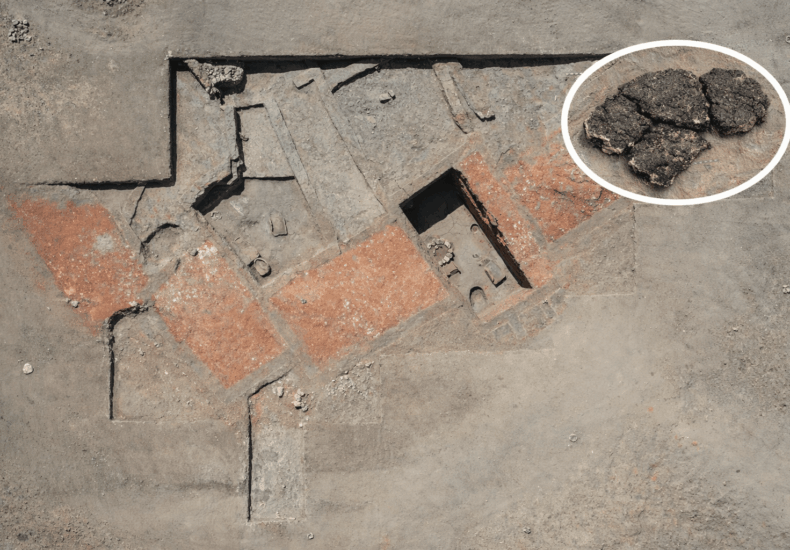
Olive Oil Workshops Reveal Syedra’s

Over 100 Olive Oil Workshops Reveal Syedra’s Role as a Late Antique Production Hub

In the steep coastal hills of southern Türkiye, the ancient city of Syedra Ancient City is revealing a side of urban life rarely seen so clearly in Late Antiquity. Archaeological excavations have identified more than 100 olive oil workshops dating to the 5th–6th centuries AD, indicating that Syedra was not merely a residential settlement but

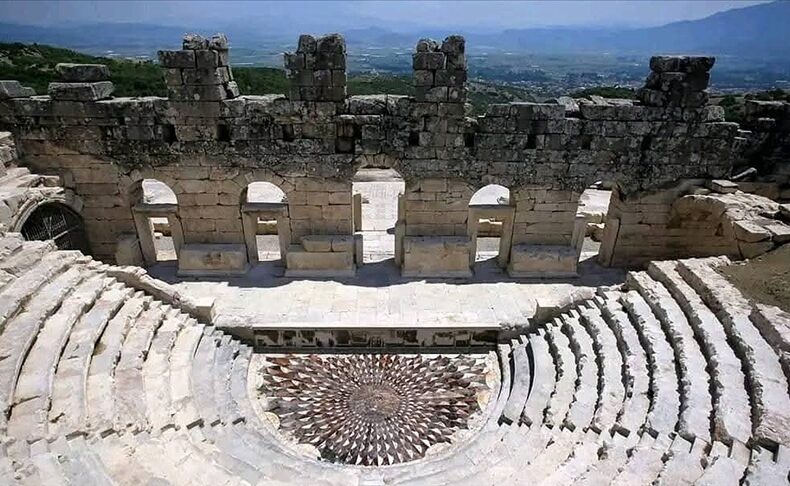
A Long-Hidden Roman Thermal Complex Emerges at Myra

A Long-Hidden Roman Thermal Complex Emerges at Myra After 15 Years of Delay

For more than a decade, a Roman-era structure lay trapped beneath modern industry at the edge of Myra Ancient City, its archaeological potential known but inaccessible. In 2025, that barrier finally disappeared. Excavations in Demre, southern Türkiye, have now brought to light an exceptional Roman thermal complex, revealing an architectural type previously undocumented in the

1 2 3 4 114