Wednesday, April 8 2026
A 600-year-old Ottoman endowment inscription carved directly into natural bedrock has been restored in Amasya, northern Türkiye. Dating to 1418, the Bayezid Pasha foundation text is now readable again after years of damage, and experts say it may represent the only known example of a waqf inscription carved into living rock anywhere in the world. Located along the banks of the Yeşilırmak River, near the Leğenkaya Waterfall, the inscription had long been obscured by graffiti and surface deterioration. The recent restoration has not only cleaned the stone but also revealed a rare form of Ottoman documentation—one that was literally engraved into the landscape. A waqf text carved into living rock Commissioned by Grand Vizier Bayezid Pasha during the reign of Ottoman Sultan Mehmed I, the inscription differs fundamentally from typical waqf documents. Instead of being written on paper or carved onto a separate stone slab, the text was engraved directly into the natural rock surface. Before carving began, the rock face was carefully leveled to create a smooth plane resembling polished marble. The inscription, executed in relief, spans approximately 3 meters in width and 110 centimeters in height. It consists of eight lines in Arabic script and contains around 125 words, excluding particles. This deliberate and permanent method of inscription suggests a strong intention to embed the legal and charitable framework of the foundation into the physical environment itself. From vandalized surface to readable text Over time, the inscription suffered significant damage. Spray paint, scratches, and informal markings had turned the surface into what locals described as a “writing board,” obscuring much of the original text. The restoration process involved carefully removing paint residues using a controlled micro-abrasion technique with travertine powder. The weakened stone surface was then stabilized with compatible conservation materials. To improve legibility, conservators applied subtle shading, allowing the carved letters to stand out more clearly without altering the original structure. As a result, the inscription has regained much of its visual clarity. Protected for the future The intervention went beyond cleaning and stabilization. A reinforced protection system was installed around the site, including structural supports and a transparent protective layer over the inscription itself. Lighting was also added to enhance nighttime visibility, ensuring the inscription can be appreciated while remaining protected from further environmental and human damage. Why this inscription matters Waqf (endowment) documents played a central role in the Ottoman world, defining how religious, social, and charitable institutions were funded and maintained. These texts were typically recorded in manuscripts or occasionally inscribed on architectural elements. The Amasya example stands apart. By carving the endowment directly into bedrock, its creators transformed a legal document into a permanent public statement embedded in the natural landscape. According to regional heritage officials, this characteristic may make it the only known rock-cut waqf inscription of its kind globally—a claim that, if further supported, would place the monument in a unique position within both Ottoman studies and the broader history of epigraphy.

Anatolian News . Black Sea

600-Year-Old Rock-Cut Ottoman Endowment Inscription Restored in Amasya, Possibly Unique Worldwide

Written by

A 600-year-old Ottoman endowment inscription carved directly into natural bedrock has been restored in Amasya, northern Türkiye. Dating to 1418, the Bayezid Pasha foundation text is now readable again after years of damage, and experts say it may represent the only known example of a waqf inscription carved into living rock anywhere in the world.

Tripolis Ancient City, Roman villa Türkiye, fish pool archaeology, Denizli ancient discoveries, Roman fresco villa, Roman hospitality, archaeology news Türkiye, ancient Roman architecture,

1,600-Year-Old Luxury Roman Villa Discovered in Tripolis: Guests Were Served Fish Raised in the Courtyard Pool

In the ancient city of Tripolis, located in Denizli’s Buldan district in western Türkiye, ongoing excavations have revealed a striking new find—a large and luxurious Roman-era villa spanning 1,500 square meters. With four rooms, two grand halls, a columned gallery, and a specially designed fish pool, this structure is believed to have hosted the elite

2,700-Year-Old Bronze Knives Discovered in Kazakhstan Shed Light on Early Saka Culture

2,700-Year-Old Bronze Knives Discovered in Kazakhstan Shed Light on Early Saka Culture

A team of archaeologists and students from Margulan University has made a groundbreaking discovery in Kazakhstan’s Pavlodar region: two rare bronze knives estimated to be over 2,700 years old. Found at the newly uncovered Toraygyr-7 burial site near the scenic Lake Toraygyr in Bayanaul National Park, the knives offer a unique glimpse into the advanced

3,000-Year-Old Lead-Free Eyeliner Discovered in Iran Reveals Ancient Cosmetic Innovation

3,000-Year-Old Lead-Free Eyeliner Discovered in Iran Reveals Ancient Cosmetic Innovation

Archaeologists in northwestern Iran have uncovered a groundbreaking 3,000-year-old eyeliner made from natural minerals—without any lead—offering rare insight into the beauty rituals and technological sophistication of Iron Age societies. In a remarkable discovery from the Iron Age III period (7th–9th centuries BCE), researchers have identified an entirely lead-free eyeliner formula in the Kani Koter cemetery,

A First in Türkiye: Hands-On Bioarchaeology Workshop at Arslantepe Mound Begins

A First in Türkiye: Hands-On Bioarchaeology Workshop at Arslantepe Mound Begins

Arslantepe Mound, a UNESCO World Heritage Site located in the Battalgazi district of Malatya, is hosting Turkey’s first-ever hands-on bioarchaeology workshop. Running from July 11 to July 25, 2025, this scientific training program marks a milestone in archaeological education in the country. Led by Prof. Dr. Francesca Balossi Restelli from Sapienza University of Rome and

Hittite Bull-Headed Jug Piece

Excavator Operator Uncovers Ancient Treasure: Hittite Bull-Headed Jug Piece Now on Display in Sivas Museum

In a remarkable twist of fate, a routine sand excavation near Türkiye’s Kızılırmak River led to the discovery of an extraordinary artifact from the ancient Hittite civilization. A bull-headed piece of a massive ceremonial jug, dating back over 3,000 years, has been unearthed by an excavator operator in the Şarkışla district of Sivas Province—and is

6,000-Year-Old Temple with Blood Channel and Altar Unearthed in Elazığ, Türkiye

6,000-Year-Old Temple with Blood Channel and Altar Unearthed in Elazığ, Türkiye

A 6,000-year-old temple site has been discovered during archaeological excavations in the village of Tadım in Elazığ, eastern Türkiye. This significant find sheds new light on the region’s ancient past. The excavations, coordinated by Türkiye’s Ministry of Culture and Tourism and carried out by the Elazığ Provincial Directorate of Culture and Tourism together with the

Antandros Ancient City

2025 Excavation Season Begins at Antandros Ancient City: Focus on Early Christian Baptistery

The 2025 excavation season has officially started at the ancient city of Antandros, located in the Edremit district of Balıkesir, Türkiye. Led by Prof. Dr. Gürcan Polat, a faculty member at Ege University’s Department of Classical Archaeology, the excavation team continues to uncover the deep-rooted history of the site. Baptistery Becomes the Main Excavation Area

2,700-Year-Old Urartian Columns Unearthed at Kef Castle

2,700-Year-Old Urartian Columns Unearthed at Kef Castle: A Discovery Shedding Light on Anatolian History

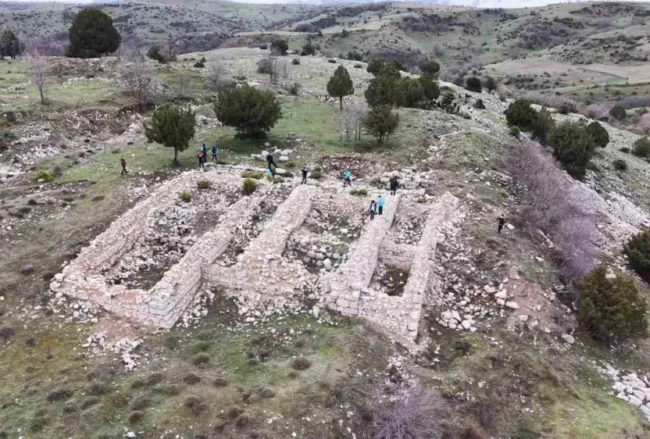
Archaeological excavations at Kef Castle, located in the Adilcevaz district of Bitlis province, have revealed a stunning discovery: 49 massive “elephant foot” columns, dating back nearly 2,700 years to the Urartian period. Perched on the slopes of Mount Süphan and overlooking the breathtaking Van Lake, Kef Castle was built by King Rusa II of the

Archaeologists Discover Centuries-Old Prayer Tablet and Ottoman-Era Treasures in Eastern Türkiye

Archaeologists Discover Centuries-Old Prayer Tablet and Ottoman-Era Treasures in Eastern Türkiye

Archaeologists working at the historic Bitlis Castle in eastern Türkiye have unearthed a rare centuries-old prayer tablet along with Ottoman-era coins, ceramic fragments, an ancient water distribution system, and several graves. The discovery is shedding new light on the region’s diverse religious and cultural history. The excavation, authorized by the Turkish Ministry of Culture and

Archaeologists have uncovered a 1,700-year-old Roman bathhouse in a field in the village of Salkaya, located in Elazığ province in eastern Turkey. The discovery, which was made possible through ground-penetrating radar (GPR) and systematic excavations, offers valuable insights into the region’s Roman past and is believed to have belonged to an elite social class of the Late Roman Empire. The bath complex includes cold, warm, and hot rooms, a hypocaust (underfloor heating system), sweat rooms, pools, and both fresh and wastewater channels. With its advanced engineering and well-preserved structure, experts say the bathhouse stands out as one of the most significant Roman-era discoveries in the region. From Mosaic to Monument: Signs of an Ancient Settlement The initial clue to the area's rich history emerged in 2023 when a local farmer digging to plant cherry trees stumbled upon a colorful Roman floor mosaic adorned with animal figures. Following this discovery, researchers conducted GPR scans in the surrounding area and identified the outline of a larger structure just 70 meters to the south. Excavations in 2024 confirmed the presence of a Roman bath complex covering approximately 75 square meters. This finding has expanded the archaeological significance of the area and sparked renewed interest in its ancient urban layout. "We Believe This Was a Roman Settlement" Ahmet Demirdağ, Director of Culture and Tourism for Elazığ Province, emphasized the importance of the discovery: “The architectural features and technical complexity of the bathhouse indicate that it was used by members of the upper class. This find strongly suggests that the area was once a Roman settlement. We have now registered 30 acres of land for further exploration.” Demirdağ added that ongoing excavations aim to uncover more structures from the same period, further enriching the region's cultural heritage. A First for Elazığ Lead archaeologist Emre Çayır highlighted that this is the first Roman bathhouse of its kind discovered within Elazığ’s borders. “The hypocaust heating system, the well-preserved layout of hot, warm, and cold rooms, and the use of basalt and limestone blocks all point to advanced Roman engineering. It’s remarkable that such a structure was hidden beneath agricultural land for so long.” According to Çayır, the site offers not only architectural value but also deep insights into the public health practices, water culture, and daily life of Roman society in Anatolia.

Ancient Roman Bathhouse Discovered Beneath Farmland in Eastern Anatolia

Archaeologists have uncovered a 1,700-year-old Ancient Roman bathhouse in a field in the village of Salkaya, located in Elazığ province in eastern Anatolia. The discovery, which was made possible through ground-penetrating radar (GPR) and systematic excavations, offers valuable insights into the region’s Roman past and is believed to have belonged to an elite social class

1 31 32 33 34 35 118